Science · A1 · A2

The hummingbird: 1,200 heartbeats a minute and an almost icy sleep

It weighs less than a coin, its heart beats more than a thousand times a minute and it has to eat almost all the time. To survive the night it does something incredible: it switches itself almost completely off.

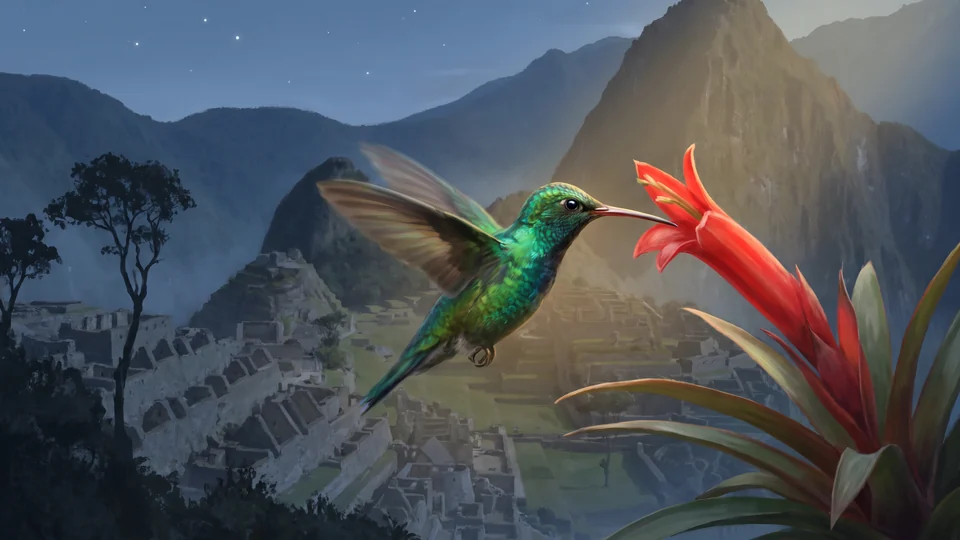
A small, shiny green hummingbird hovers in front of a red flower, its wings moving very fast
A1

Un uccello piccolo, numeri grandi

Numbers: from one to a thousand and beyond

Questo è un colibrì. È un uccello molto piccolo e vive in America.

Il colibrì più piccolo del mondo vive a Cuba. È lungo cinque o sei centimetri e pesa circa due grammi: meno di una moneta da un centesimo!

Il colibrì vola davanti ai fiori e beve il nettare, un liquido dolce. Quando vola, le sue ali battono cinquanta, sessanta, a volte ottanta volte in un secondo. Noi non vediamo le ali: vediamo solo una piccola nuvola.

E il cuore? Il nostro cuore batte sessanta, settanta volte in un minuto. Il cuore del colibrì batte milleduecento volte in un minuto!

Per questo il colibrì ha sempre fame. Ogni giorno visita centinaia di fiori.

Ma di notte c’è un problema: è buio e il colibrì non mangia per dieci, dodici ore. Che cosa fa?

Fa una cosa speciale: si «spegne». Di giorno il suo corpo ha quaranta gradi. Di notte, in montagna, un colibrì delle Ande arriva a tre gradi! Il cuore batte solo quaranta volte in un minuto. Il colibrì non si muove. Sembra morto, ma è vivo.

La mattina arriva il sole. In meno di un’ora il corpo torna a quaranta gradi, il cuore torna a mille battiti, e il colibrì vola di nuovo verso un fiore. Buongiorno!

The structure of this text

  • Pesa circa due grammi. → from 1 to 20 you learn the numbers by heart: uno, due, tre… dieci… venti
  • Le sue ali battono cinquanta, sessanta, a volte ottanta volte in un secondo. → the tens: trenta, quaranta, cinquanta, sessanta, settanta, ottanta, novanta
  • Il cuore batte milleduecento volte in un minuto. → cento, mille (plural mila: duemila); the number is written as one word

Try it: write the numbers in words. Il colibrì pesa (2) … grammi. Il suo cuore batte (1.200) … volte al minuto. Il mio cuore batte (70) … volte.

Useful words

il colibrì = hummingbird
l’ala (le ali) = wing (plural: le ali)
il cuore = heart
il fiore = flower
pesare = to weigh

Questions

  1. Quanto pesa il colibrì più piccolo del mondo?How much does the smallest hummingbird in the world weigh?
  2. Quante volte batte il cuore del colibrì in un minuto? E il nostro?How many times does the hummingbird’s heart beat in a minute? And ours?
  3. Quanti gradi ha il corpo del colibrì di giorno? E di notte, in montagna?What is the hummingbird’s body temperature during the day? And at night, in the mountains?
  4. E tu? Quanti anni hai? Quante ore dormi? Quanti caffè bevi al giorno? Scrivi i numeri in lettere.And you? How old are you? How many hours do you sleep? How many coffees do you drink a day? Write the numbers in words.

A2

Che cosa sta facendo il colibrì?

Stare + gerund: what is happening right now

Sono le sei di sera sulle Ande del Perù, a più di tremila metri di altezza. Il sole sta tramontando e l’aria sta diventando fredda. Un colibrì nero, piccolo come un dito, sta ancora volando da un fiore all’altro: sta bevendo le ultime gocce di nettare della giornata.

Perché ha tanta fretta? Perché il colibrì consuma energia in modo incredibile. Il suo cuore può battere più di mille volte al minuto e le ali si muovono decine di volte al secondo. Se non mangia per tutta la notte con questo ritmo, rischia di morire di fame prima dell’alba.

Adesso è buio. Il colibrì si è fermato su un ramo e sta facendo una cosa straordinaria: si sta spegnendo. La temperatura del suo corpo sta scendendo, grado dopo grado. Il cuore sta rallentando: cento battiti al minuto, sessanta, quaranta.

Nel 2020 un gruppo di ricercatori guidato dal biologo americano Blair Wolf ha misurato la temperatura di 26 colibrì di sei specie durante la notte. Il campione era proprio un colibrì nero delle Ande: il suo corpo è sceso da circa 40 gradi a 3,26 gradi. È la temperatura più bassa mai misurata in un uccello.

Che cosa sta succedendo dentro di lui? Si chiama torpore. Il colibrì non sta dormendo come noi: è quasi spento, come un telefono in modalità di risparmio energetico. In questo stato può usare fino al 95 per cento di energia in meno. Se un ricercatore lo prende in mano, il colibrì non si muove: sembra morto.

Alle cinque del mattino, quando il cielo sta diventando chiaro, il colibrì sta già scaldandosi: fa tremare i muscoli, e il cuore sta accelerando.

Quando arriva il primo raggio di sole, il colibrì sta già volando verso il primo fiore. Ha passato la notte al freddo di un frigorifero. E adesso ha una gran fame.

The structure of this text

  • Il sole sta tramontando. → stare in the present + gerund: an action in progress right now
  • Il colibrì sta bevendo le ultime gocce di nettare. → the gerund: -are → -ando, -ere / -ire → -endo
  • Il colibrì si sta spegnendo. → with reflexive verbs: si sta spegnendo or sta spegnendosi, sta scaldandosi

Try it: what is happening? Il colibrì (volare) … verso un fiore. Il cuore (rallentare) … . Io (leggere) … un testo sul colibrì.

Useful words

il nettare = nectar
tramontare = to set (of the sun)
rallentare = to slow down
scaldarsi = to warm up
consumare = to use up, to consume

Questions

  1. Che cosa sta facendo il colibrì alle sei di sera? Perché ha fretta?What is the hummingbird doing at six in the evening? Why is it in a hurry?
  2. Che cosa sta succedendo al suo corpo durante la notte?What is happening to its body during the night?
  3. Che cosa hanno scoperto i ricercatori nel 2020?What did the researchers discover in 2020?
  4. E tu? Che cosa stai facendo in questo momento? E che cosa stanno facendo le persone intorno a te? Scrivi tre frasi con stare + gerundio.And you? What are you doing right now? And what are the people around you doing? Write three sentences with stare + gerundio.

Italiano con Martin

Choose who to learn Italian with

Two teachers, two perspectives. Choose the approach that best matches your interests.